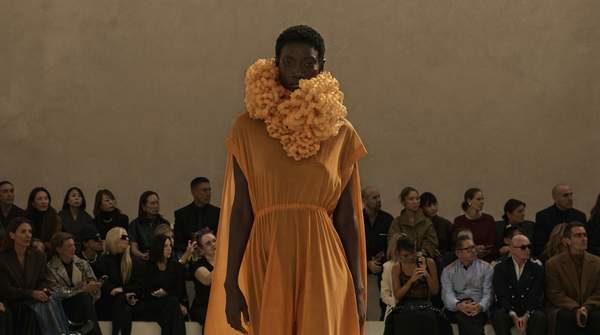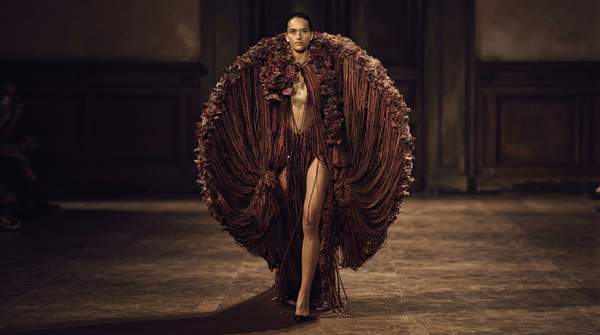
The haute couture show began as a private sales meeting and became a globally broadcast cultural performance. In the 1850s, Charles Frederick Worth invited clients to his Paris atelier to view and order garments; today, a couture show lasts barely fifteen minutes yet, as the Vitra Design Museum's exhibition history of the catwalk puts it, its "imagery circles the globe." Understanding that transformation requires tracing three distinct eras, each with its own purpose, audience, and mechanism of exclusivity.
The Private Salon: Intimacy and Direct Sales (c. 1850s-1940s)
The couture industry was born in 1850s Paris, when haute couturiers visited clients at home for fittings. Worth, regarded as the founder of haute couture, reversed that flow: he invited customers to his atelier at the House of Worth, founded in 1858 at 7, rue de la Paix, and was the first designer to organize such presentations twice a year. The salon show was thus, from its inception, a commercial instrument—a direct client-designer relationship oriented entirely toward sales.
Historical accounts of the era describe an exclusive in-house presentation held for a private clientele, with access restricted to purchasing clients. In Paris, clients attended intimate salon shows and placed orders through their vendeuse, a saleswoman who developed a close personal relationship with each client. The setting was small-scale and personal: the designer's own atelier, not a rented stage.
Secrecy was the era's defining protection. When Elsa Schiaparelli showed a collection on a catwalk at Saks in New York in 1931, photographers were not allowed to attend, to stop designs being copied; the collections were instead sketched by artists. Exclusivity in this period was physical and procedural—designs remained proprietary to the clientele precisely because so few people could see them.
The Formal Presentation: Controlled Media and Emerging Brand (c. 1950s-1980s)
The rise of the ready-to-wear industry after World War II changed the couture show's function, as the fashion encyclopedia entry on fashion shows records: the targeted audience shifted from private clientele to one consisting mainly of press and buyers. The show was no longer purely a sales meeting; it became a channel through which trends were disseminated in a controlled way to intermediaries who would carry the house's image outward.
The 1960s, according to the same account, mark the beginnings of the fashion show as a marketing tool to promote the licensed products associated with a house—a decisive broadening of commercial interest beyond the garments on the runway. Couture's economic role was shifting from direct revenue toward credibility and brand image.
By the 1970s and 1980s, public visibility and the magnitude of fashion shows increased dramatically. In 1973, Kenzo presented a large-scale ready-to-wear show on a stage rather than a runway, a break with couture tradition that signaled the growing emphasis on spectacle. Even so, the intimate salon shows of Chanel in the 1950s, as the Guardian's history of the fashion show notes, still bore no resemblance to what would come; the main change—scale, location, set production, and budget—was still ahead.