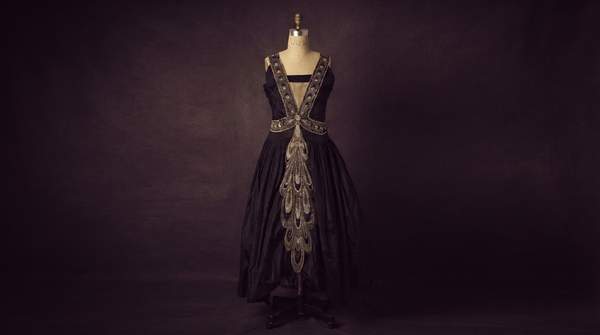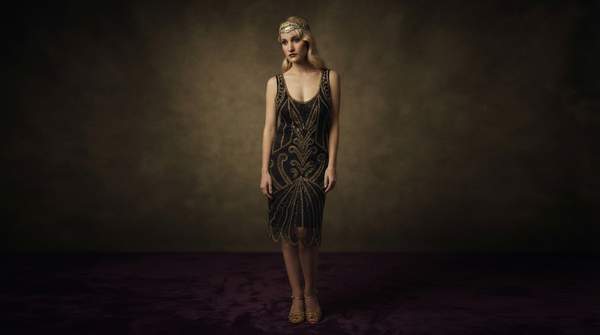
The Art Deco movement of the 1920s and 1930s was a language of luxury, geometry, and modernity, expressed through sleek lines and rich materials. This aesthetic found a powerful voice not only in skyscrapers and furniture but also in the world of haute couture. Designers translated the era's principles of symmetry and surface sheen into avant-garde garments that defined a new sense of glamour. The work of couturiers like Jeanne Lanvin provides a clear example of this influence, where abstract design concepts were rendered tangible in silk, satin, and intricate stitching, creating clothing that was both stylish and sculptural.
The influence of Art Deco on fashion was not merely a matter of applying decorative motifs; it was a fundamental rethinking of the garment's form and its relationship to the body. The movement's core tenets—a fascination with geometric purity, a love for opulent and modern materials, and an emphasis on streamlined, fluid silhouettes—were meticulously woven into the fabric of high fashion. By examining specific garments from this period, it becomes possible to see the direct translation of artistic principles into the tangible details of construction, cut, and material choice, revealing how a broader cultural movement shaped the very definition of elegance.
Art Deco's Core Principles in Fashion Design
At its heart, Art Deco design is characterized by a profound emphasis on symmetry and geometric form. This visual harmony, achieved through the careful mirroring of shapes across a central axis, creates a sense of balance and sophisticated order. In fashion, this translated into the bold use of motifs like chevrons and zigzags on dresses and textiles, as noted by design resource Primoends Home Decor to Go. These were not random patterns but deliberate expressions of a modern, machine-age aesthetic. Sleek lines were another hallmark, creating a sense of elegance in motion that was perfectly suited to the newly liberated silhouettes of the era.
This aesthetic was inseparable from a commitment to opulence. According to Sotheby's, the Art Deco movement was synonymous with luxury, utilizing rich colors and materials to create an atmosphere of glamour. This principle was enthusiastically adopted by couturiers. The Victoria and Albert Museum highlights how designers captured the era's "fascination with light and surface sheen" through the use of reflective fabrics like satin. This combination of severe geometry with luxurious materials became a defining feature of Art Deco fashion, creating garments that were both intellectually rigorous in their design and sensuously appealing in their execution.