Authenticating vintage haute couture is not a matter of finding one telltale tag. It is a comparative exercise in weighing four distinct methods — physical examination, archival cross-referencing, provenance research, and technology-assisted analysis — each of which yields a different kind of evidence, demands different expertise, and fails in different ways. The practitioners who handle these garments daily are emphatic on one point: a garment is judged as a whole, never on a single identifying feature, because tags overlap between production periods, brands use multiple label variations simultaneously, and reproductions imitate older details with conviction.
The Challenge of Authenticating Vintage Haute Couture
The vintage marketplace is, by the account of the British reseller My Vintage, a landscape of pitfalls for the inexperienced: authentication and condition assessment are where acquisition strategies most often go wrong, and the financial stakes are real. Their guidance to collectors is that authentication demands a meticulous combination of visual inspection, historical knowledge, and technical expertise — an understanding of manufacturing techniques, materials, and the design nuances of a period. Serious collectors, they note, develop sophisticated skills precisely to separate authentic garments from contemporary reproductions.
What makes the task genuinely difficult is that the evidence itself is unstable. The American dealer Vintage Rare USA frames the problem plainly: tags change, sizing varies by decade, reproductions exist, and manufacturing details differ between brands and eras. Their own authentication process is designed, in their words, "to reduce that uncertainty" — not to eliminate it. That admission is the honest baseline for any collector: authentication is probabilistic, and the four methods below are best understood as independent witnesses whose testimony must agree.
Method 1: Physical Examination (Construction and Materials)
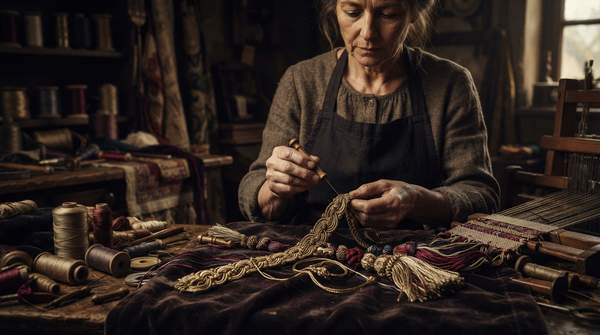
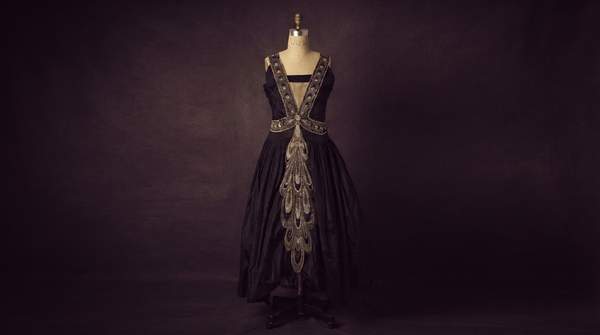
Physical examination is the foundation of the discipline, and its subject is the garment's body rather than its paperwork. Original vintage pieces typically feature hand-stitching, distinctive seam treatments, and fabric compositions characteristic of their historical period, according to My Vintage's collector guidance. Internal labels can reveal manufacturing locations, original brands, and production dates, while fabric composition, thread quality, zipper mechanisms, and button styles can help date a garment — experienced collectors learn to recognize subtle manufacturing variations across decades.
Vintage Rare USA's evaluation checklist shows how granular this becomes in practice: brand labels, care tags, union labels, stitching, construction, materials, graphics, hardware, manufacturing origin, copyright information, and natural aging are all treated as relevant indicators. The method's strength is its immediacy — it requires no archive, only trained eyes and hands — but its interpretive burden is heavy. Every one of those indicators must be read against period knowledge, because a single feature, examined alone, proves nothing.