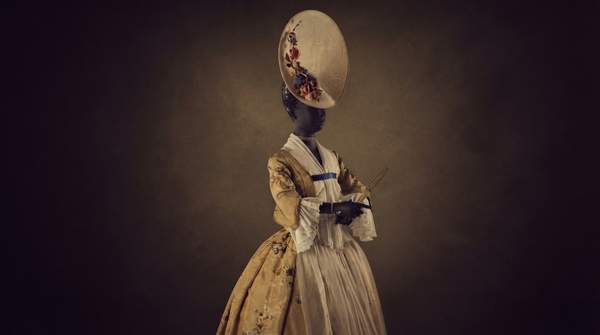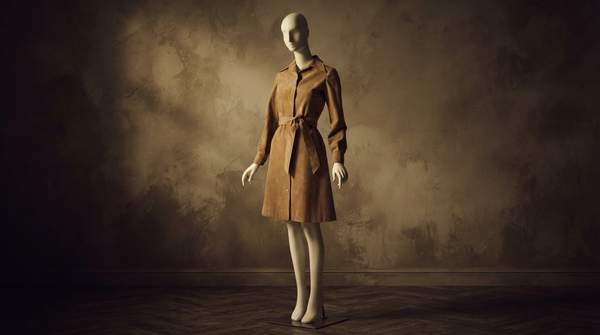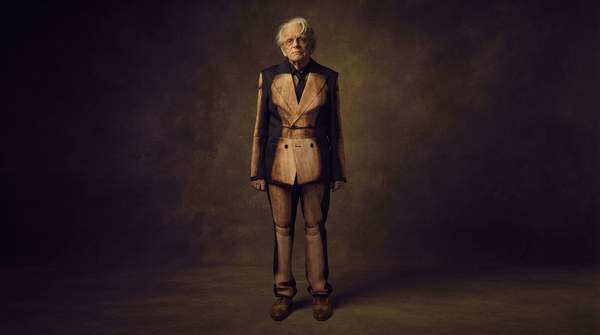
Trompe l'oeil — French for "deceive the eye" — entered fashion long before Elsa Schiaparelli made it famous. A gold and green silk afternoon dress from 1866, documented by the Fashion History Timeline at the Fashion Institute of Technology, already used the technique to give the impression of a separate bolero jacket, an approach its analysis describes as "quite uncommon" for that year. Schiaparelli did not invent the fashion illusion; she popularized and modernized it, and every era since has reinterpreted it, from Pierre Cardin's 1966 Target Dress to Loewe's 2023 pixel shirt.
The Ancient Roots of Illusion: Trompe l'Oeil in Fine Art
Before fashion borrowed the trick, painters and architects had spent millennia perfecting it. The decorative arts firm EverGreene traces the technique's roots to ancient Greece and Rome, where it created the illusion of depth and grandeur in buildings and homes. During the Renaissance it flourished as artists explored ways to blur the boundary between art and reality, adorning palaces, churches and public spaces with lifelike frescoes; in the Baroque period it became a favored method for ceilings and walls, conjuring columns, arches and vistas that seemed to extend beyond a room's physical limits.
The legend that anchors the technique is older still. As the fashion writer Juliette Eleuterio recounts for Culted, the origins reach back to a painting of grapes by the ancient Greek artist Zeuxis — grapes so realistic that birds reportedly flew down to peck at them. Renaissance painters then took up the play of perspective, with late-quattrocento artists such as Andrea Mantegna and Melozzo da Forli producing impossible buildings and infinite spaces. The term itself, however, is comparatively recent: it was coined in the 1800s by the French painter Louis-Léopold Boilly, himself a master of pictorial deception.
Early Fashion Illusions: From 19th-Century Construction to Schiaparelli's Surrealism
The 1866 silk afternoon dress shows how early the technique appeared in dressmaking — and how isolated it remained. The garment, held in a museum collection and analyzed by FIT's Fashion History Timeline, features a trompe l'oeil bolero jacket worked in coordinating green and gold silk, with bows and ruffles emphasizing the back of the silhouette. While the bolero jacket itself was popular in 1866, the timeline's garment analysis notes that the trompe l'oeil feature was not widely featured in fashion magazines of the time. In other words, the illusion was a fashion-forward curiosity rather than the start of a continuous tradition.
The tradition truly begins with Elsa Schiaparelli. Her bowknot sweater, launched in 1927, appears to carry an ornately tied white cravat, but the cravat is in fact part of the black knitted jumper. As Rosalind McKever, a curator of paintings and drawings at the Victoria and Albert Museum, explains, Schiaparelli commissioned the maker Aroosiag Mikaëlian to create the effect using an Armenian two-tone knitting technique. The design became Schiaparelli's first fashion hit and was copied at every price point. Where the 1866 dress had used constructed silk elements to suggest a jacket, Schiaparelli used knitting itself to paint an image onto the garment — a shift from built illusion to graphic illusion, and one made in close dialogue with the Surrealist art of her circle.