Every shaped gown begins with a single decision: will the fabric be sculpted directly on a dress form, or will its geometry be calculated first on paper? Draping manipulates material in three dimensions, while drafting builds precise two-dimensional patterns that are then cut and assembled. Which path a couture house chooses is rarely aesthetic whim; it is a reasoned trade-off among silhouette, fabric behavior, and production context. Understanding that trade-off is the key to reading the craftsmanship behind any garment's form.
The Art of Form: Draping vs. Drafting in Haute Couture
Patternmaking educators at Rocky Mountain College of Art + Design frame the choice in unusually practical terms: clean or structured pieces favor drafting, while fluid or asymmetric garments are better suited to draping. Around that core distinction sit further questions — whether the garment is meant for production, whether it can be replicated across multiple sizes, and how a given fabric's behavior will shape the finished piece. Both techniques create volume and structure; they simply locate the creative act in different places. The draper discovers form through the material itself, while the drafter prescribes it through measurement and geometry. In haute couture, where a single gown can consume from dozens to several thousand hours of work, this initial choice echoes through every subsequent hour of construction.
Draping: Sculpting on the Form
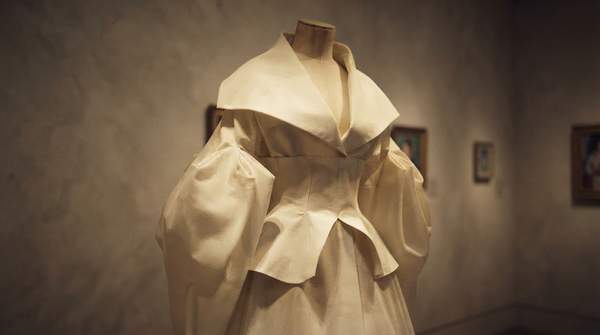
Draping is the more tactile of the two methods: fabric — typically muslin in the prototype stage — is arranged directly on a three-dimensional form, its folds and volume guided by hand. The resulting muslin is then translated into a paper pattern for the final garment. Because the designer works with the material itself, draping allows the form and proportions of a garment to be changed with great ease, making it the natural method for experimentation with shape and volume. Garment-industry training materials note that luxury and semi-luxury houses use draping to create prototypes precisely for this freedom of exploration.
The technique is especially suited to unique, sculptural shapes that follow the body's contours, and to fluid or sheer fabrics that reveal their character only when allowed to fall. Chiffon silk, being thinner than other silks and allowing easier movement and flow, is one such cloth traditionally associated with draping.