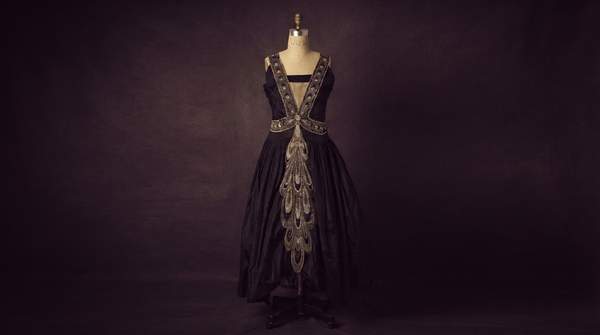
In 1821, King George IV reportedly reduced his waist from 55 to 50 inches for his coronation, a remarkable feat of sartorial discipline documented by History Extra. This personal endeavor by a monarch revealed the profound societal pressure to conform to an idealized body shape, even for those at the zenith of power. Such extreme modifications cemented the era's pervasive pursuit of a specific aesthetic silhouette, showcasing a deep cultural investment in outward presentation.
Yet, the corset, this very instrument of aesthetic transformation, is widely believed to have caused widespread, severe organ damage. Historical and medical research, however, reveals a more complex picture, encompassing both genuine risks and exaggerated claims. This tension between perceived harm and actual physiological impact defines much of its historical narrative.
Therefore, while the corset's past is marked by both genuine physical strain and evolving medical understanding, its persistent cultural appeal suggests a continued societal fascination with body shaping, albeit with modern interpretations. A nuanced examination of its role in fashion evolution and societal norms thus becomes essential.
The Rise of the Structured Silhouette
The introduction of metal eyelets in France in 1828 marked a pivotal advancement in corset design, according to RCS Eng. This technological innovation directly enabled the practice of tight lacing, a technique that gained prominence in the 1820s and 1830s. Such rigorous lacing, while achieving desired aesthetics, could reduce lung capacity, irritate the skin, and weaken back and chest muscles, as reported by NYAM. This period saw the development of the iconic, slender waistline, a defining characteristic of the structured silhouette.
Dr. Rebecca Gibson's research found that the average 18th and 19th-century waist size, after corseting, was 22 inches, according to History Extra. The advent of these reinforced corsets allowed for more extreme body modification, solidifying the garment's role in shaping fashion history. Technological progress, therefore, directly shaped both fashion practices and their physiological consequences, pushing the boundaries of the human form.

The Real Health Toll: Deformity and Discomfort
Dr. Rebecca Gibson's research on skeletons dating from 1700 to 1900 revealed consistent evidence of physical alteration. Each examined skeleton displayed a deformed ribcage and a misaligned spine, according to History Extra. This archaeological evidence provides concrete confirmation that tight lacing induced significant and lasting physical changes, a testament to the body's malleability under sustained pressure.
Early medical claims, such as those by Sömmerring, suggested corsets could lead to severe ailments like tuberculosis, cancer, and scoliosis, according to PMC. Yet, many health problems previously blamed on corsets, including postpartum infections and tuberculosis, were later found to have unrelated explanations, as noted by NYAM. This historical tendency to misattribute complex medical conditions to fashion choices reveals a pattern of speculative diagnoses without sufficient evidence. The enduring myth of the corset as a universally destructive garment, propagated by early medical claims like Sömmerring's, obscures the historical reality that many alleged health detriments were later disproven or misattributed, making it a cautionary tale about medical sensationalism.
Despite immediate impacts like reduced lung capacity, the long-term health effects of tight lacing, such as reduced pelvis size, constipation, digestive issues, and reproductive problems, remain difficult to assess and unclear, according to NYAM. Definitive quantification of chronic conditions over time presents significant challenges due to limitations in historical medical data, leaving a complex legacy of both proven and unproven physiological consequences.
Beyond Restriction: Corsets as Support and Innovation
Not all corsets were designed solely for aesthetic constriction; some innovators focused on ergonomic support. Dr. Inès Gâches-Sarraute, for instance, developed a supportive corset from 1890 onwards specifically to address gynecological issues in women. Her design introduced a straight-fronted busk, which supported the abdomen rather than compressing it, as documented by Fashion History. This innovation directly contradicted the common perception of corsets as solely restrictive and harmful, revealing a more thoughtful approach to the garment's potential.
While figures like King George IV and Dr. Rebecca Gibson's skeletal evidence confirm genuine physical impact from extreme body modifications, the development of supportive corsets by innovators like Dr. Inès Gâches-Sarraute reveals a forgotten chapter of ergonomic design. This nuanced history challenges the simplistic narrative of corsets as purely oppressive tools. Such specialized corsets marked a broader design evolution, where the maker's hand sought to reconcile fashion with physiological well-being, demonstrating a surprising foresight in an era often characterized by rigid aesthetics.
Debunking Myths and Modern Resurgence
The historical tendency to misattribute complex medical conditions to fashion choices led to many pervasive health claims against corsets, such as those alleging they caused tuberculosis and cancer. These were often speculative and later disproven, as many health problems previously blamed on corsets, including postpartum infections and tuberculosis, were later found to have unrelated explanations, according to NYAM. The importance of historical context in medical understanding is emphasized, allowing for a more accurate appreciation of the garment's true impact.
Despite these historical misattributions and the nuanced understanding of their genuine risks, the corset maintains a significant presence in contemporary fashion. Its current popularity often links to movements like hyper-femininity, with trends such as 'regency core' and 'cottage core' popularizing its silhouette, as reported by The Guardian. This modern resurgence confirms a continued cultural fascination with shaping the body, reinterpreted through nostalgic or aesthetic lenses that, while embracing the form, often overlook the deeper historical complexities and the evolution of its design.
As new research continues to unravel the corset's intricate past, its enduring presence in fashion and culture suggests it will likely remain a potent symbol of body shaping, continually reinterpreted through the lens of evolving aesthetics and medical understanding.