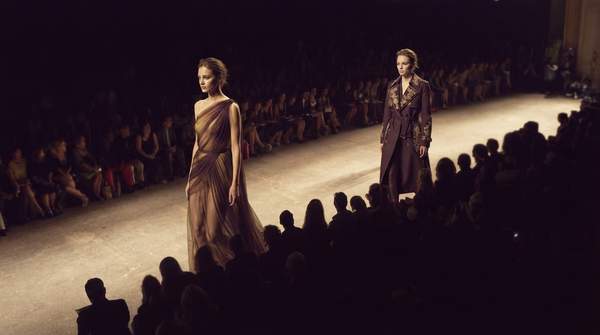
Runway lighting is not simple illumination. Two core techniques—front lighting and cross lighting—determine how a garment is seen, while the choice of fixture determines how precisely that light can be controlled. Together, they turn a catwalk into a narrative instrument, a point made vividly by the warm golden wash of Dior's Haute Couture Spring-Summer 2019 show.
The Art of Illumination: Setting the Stage for Fashion
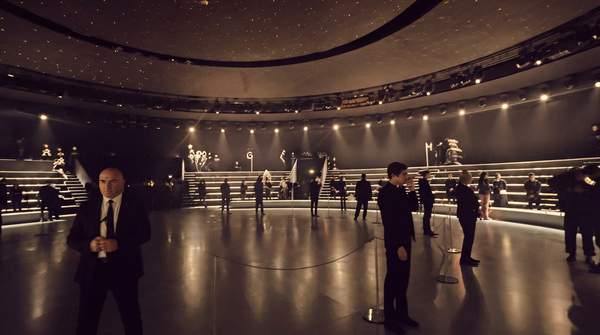
A fashion show is, as Springtree Media puts it, "completely visually driven," which is why the lighting technician matters as much as the choreography. The runway stage sits in the middle of the audience rather than in front of it; the fixtures do not move, but the models do. Every light source must therefore be adjusted for angle, coverage, and intensity so that the models remain well lit wherever they stand, and so that the light stays on the stage rather than bleeding into the seats.
For high-end collections, the stakes are higher still. Writing in Vietcetera, Bích Trâm notes that on the runway "even small discrepancies between photos and the real product are unacceptable." Beyond accurate color, lighting eliminates harsh shadows that can obscure key design elements, ensuring a consistent and flattering look as models move along the runway.
Front Lighting: Highlighting Detail and Form
Front lighting is positioned, as its name suggests, in front of the runway—typically at about a 45-degree angle to it. Its purpose is direct: illuminating the models' faces and the front of the garments, the surfaces an audience and a camera see first. It is often supplemented at the end of the catwalk, where models pause, so photographers get clear, well-lit shots at the moment a look is held still.
This is the workhorse angle of runway design. It answers the commercial demands of the show—press images, social media content, marketing material—by guaranteeing that the garment's principal surfaces read cleanly. Where front lighting ends, the more sculptural work of other angles begins.
Cross Lighting: Adding Depth and Dimension
Cross lighting places fixtures on both sides of the runway, angled to cross over the models as they walk. According to Light Sky's lighting design guidance, these units are often hung to form an upside-down "V" shape. The result is comprehensive visibility: both the front and the back of each garment are illuminated in motion, so no part of the look falls into shadow as the model passes.
Where front lighting favors the camera and the frontal view, cross lighting favors the walk itself. It is the technique that keeps a garment legible through 360 degrees of movement—the difference between a look that photographs well and one that reads from every seat in the house.