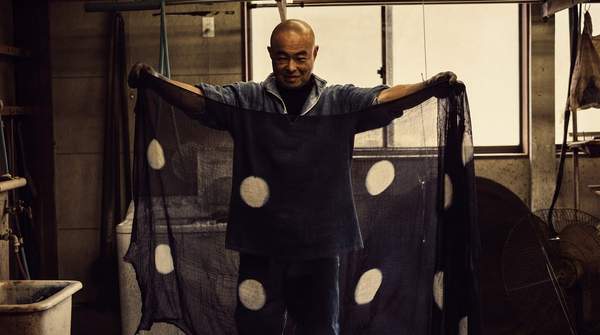
Natural dyes are colorants extracted from biological and geological sources—plants, insects, and minerals—rather than synthesized from petrochemical feedstocks. In textiles, they are drawing renewed interest because conventional dyeing is among the industry's most polluting processes: one review of sustainable dyeing notes that producing a single T-shirt consumes roughly 250 gallons of water from raw material to finished garment, and that dyeing waste carries thousands of pollutants and chemicals into nearby rivers and canals. Against that backdrop, dyes drawn from trees, bark, leaves, and flowers are being re-examined as a step toward less polluting textile processing.
Introduction: What are Natural Dyes?
A natural dye, in the textile sense, is a colorant obtained directly from a renewable or geological source rather than manufactured synthetically. The distinction matters historically as much as chemically: for millennia, virtually all colored cloth was dyed with materials gathered from the surrounding landscape. A review tracing the history of natural and synthetic dyes records dyeing practices across ancient Egyptian, Greek, Roman, Chinese, and Indian cultures, spanning roughly 2500 BCE to 500 CE—an unbroken tradition of several thousand years before chemistry offered an alternative.
The shift away from natural colorants was economic rather than aesthetic. As a European Commission research summary on dye cultivation explains, many plants produce stable colorations that were used as dyes in the past, but their use declined once organic dyes based on coal and other fossil feedstock became available at lower cost. The modern revival, by contrast, is driven by environmental concern and consumer preference: the same Commission project framed its work as reversing the fossil-dye trend and creating opportunities for both farmers as growers and the fabric industry, in line with consumer trends toward natural products.
Sources of Natural Dyes: From Earth to Fabric
Natural dyes are conventionally grouped by the origin of their raw material. Plant-based dyes are drawn from leaves, roots, bark, flowers, and fruit; a review of natural dye raw materials observes that colorants can be extracted from trees, bark, leaves, flowers, and many more sources. Animal-based dyes are far rarer, with the most famous historical example being an insect-derived red. Mineral pigments, drawn from the earth itself, form the third and smallest category.
The historical record of plant dyeing is especially rich in East Asia. The ancient Chinese, according to the historical review of dyes, developed methods for extracting dyes from plants including indigo, woad, and gardenia to produce an extensive palette of colors, and they mastered the art of silk dyeing—a practice that gained prominence through the Silk Road trade routes. That single tradition illustrates the breadth of the plant category: one species yielding blue, another yielding yellows, each requiring its own extraction technique refined over generations.
Comparing Key Natural Dyes by Source and Color
Three historically significant dyes—indigo, madder, and cochineal—show how differently sourced materials converge on the dyer's palette. Indigo and madder are both plant-derived, yet they deliver entirely different colors; cochineal, uniquely among the three, comes from insects rather than vegetation. Categorizing them by source demonstrates the range of origins available to natural dyers:
| Dye Name | Source Type | Origin (Plant/Animal/Mineral) | Typical Color |
|---|---|---|---|
| Indigo | Plant | Plant (leaves of indigo-bearing plants, used since antiquity) | Blue |
| Madder | Plant | Plant (root) | Red |
| Cochineal | Insect | Animal (insect-derived) | Red |
The comparison makes the central distinction visible: two of the three landmark dyes come from plants, while cochineal shows that animal sources also produced colors of enduring historical importance. Indigo's blue and madder's red together demonstrate that even within a single source category, the resulting palette spans the color wheel.
Historical Significance: Colors of the Past
Indigo deserves particular mention as the elder statesman of the group. The review of natural dye raw materials notes that indigo has been used for thousands of years for the coloration of textiles as a natural source, making it one of the longest continuously used dyes known. Its companion plant, woad, served cultures that lacked access to tropical indigo, while gardenia extended the Chinese palette toward yellow and other hues.
The transmission of these techniques mattered as much as their invention. Chinese mastery of silk dyeing, as the historical review recounts, gained prominence because of the Silk Road trade routes—meaning that natural dyes were not merely local crafts but commodities and knowledge systems that moved across continents. When a European Commission project in the 1990s tested the industrial feasibility of cultivated plant dyes, it was consciously revisiting a tradition that fossil-based synthetic dyes had displaced on cost, not on quality: the trials, the project reported, were promising enough that industrial use was anticipated in the near future.
The Revival of Natural Dyes: Sustainability and Unique Properties
The environmental case for natural dyes rests on the pollution profile of what they would replace. The review of dyeing sustainability frames textile processing as one of the most polluting events on earth, with dyeing waste carrying thousands of pollutants and chemicals into waterways, and positions natural dyes as a step toward a less polluting era of textile processing. A separate review of natural dye raw materials reaches the same conclusion from the material side: because the dyes come from renewable plant sources, they align with the fashion industry's turn toward green and eco-friendly textiles.
Beyond sustainability, natural dyes offer material properties that synthetics do not automatically provide. The raw-materials review reports that most natural dyes exhibit special properties including anti-microbial effects, lower toxicity, reduced allergenicity, and UV protection, and that most showed very good fastness properties in research. These are reported findings from dyeing research rather than universal guarantees—performance varies by dye, fiber, and process—but they suggest that natural colorants can be functional as well as decorative. Research continues to refine the techniques; the sustainability review describes innovations such as ionic liquids used as dye-bath auxiliaries and a waterless dyeing technique first developed by the Deutsche Textilforschungszentrum Nord-West, indicating that the field is being modernized rather than merely nostalgic.
Embracing Natural Dyes for Sustainable Textiles
Natural dyes, then, are best understood not as a romantic throwback but as a category of colorants with a proven historical record—indigo's millennia of use, madder's reds, cochineal's insect-derived crimson—and a contemporary rationale rooted in the pollution costs of synthetic dyeing. The comparison is general: the available reviews report environmental and functional advantages qualitatively, without quantifying specific impacts, and this introduction does not extend to extraction instructions, molecular chemistry, or particular luxury-brand applications.
For readers weighing the materials themselves, the practical decision is straightforward: textile producers and consumers can actively choose natural dyes to reduce environmental impact and support sustainable practices. The measurable indicator to watch is the increased availability of naturally dyed textile products in the market and clearer labeling of dye origins—signals that would show the revival moving from research trials and historical appreciation into mainstream commercial practice.
Sources
- Advancements in Sustainable Natural Dyes for Textile Applications: A Review - PMC
- A review of history, properties, classification, applications and challenges of natural and synthetic dyes - PMC
- CULTIVATION AND EXTRACTION OF NATURAL DYES FOR INDUSTRIAL USE IN NATURAL TEXTILES PRODUCTION — CORDIS | European Commission
- A Review on Natural Dyes: Raw Materials, Extraction Process, and their Properties — Austinpublishinggroup