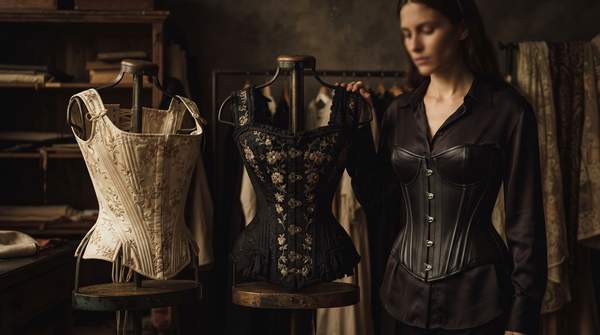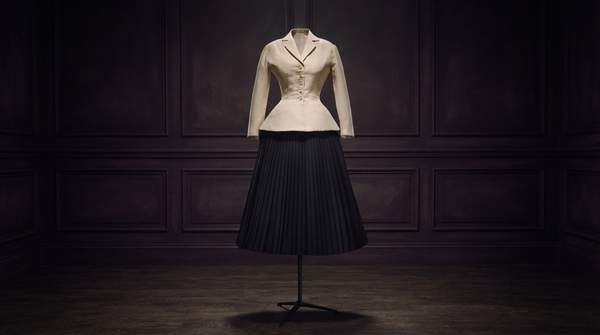
When Christian Dior presented his debut collection in spring 1947, the silhouette that critics would christen the "New Look" was not a matter of fabric draped gracefully over the body: it was a constructed object, assembled from internal corsetry, padded hips, and meticulously engineered volumes of cloth. Vogue's Laird Borrelli-Persson notes that Dior revived what he himself called "long-forgotten techniques" in the construction of his garments, and the curatorial record of The Metropolitan Museum of Art shows just how deliberately those techniques shaped the famous hourglass. What appeared natural was, in reality, artifice of the highest order.
The 'New Look' Unveiled: A Post-War Revolution
The timing of the collection was as consequential as its construction. Writing in March 1946, Vogue had already observed that "the slender silhouette" served as a symbol of elegance answering "a need in Paris hungry for almost everything"—a city, and a continent, emerging from years of scarcity. Dior's 1947 collection arrived, in the words of The Metropolitan Museum of Art, "uncompromised and complete, not as a tentative suggestion or stage in evolution." It did not gradually win favor; it announced itself fully formed. Yet as Frieze's historical account makes clear, the style "actually began as something old": the Corolle line had roots in the late 1930s, when fashion had already begun favoring a curvier silhouette before wartime restrictions curtailed it. The revolution of 1947 was, in part, a restoration.
Engineering Elegance: The Foundational Silhouette
The template that Dior's ateliers pursued can be stated precisely, because the museum's record of the dinner dress "Chérie" (spring/summer 1947) enumerates its salient elements: a sloped shoulder, a raised bustline, a narrowed waist, and "a monumental volume of skirt falling away from a padded hipline to below the calf." None of these features occurred by chance or by the natural fall of the cloth. Each corresponds to a structural intervention—one at the shoulder, one at the bust, one at the waist, and one at the hip—working in concert to compress the body's center and amplify its extremities. The reader should hold this four-part anatomy in mind, because every construction technique documented in the sources serves one of these stations.