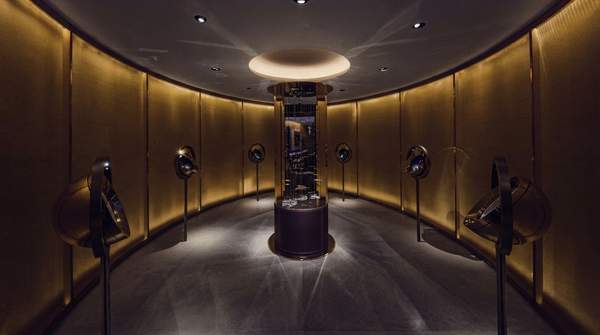
Protecting a collection of valuable timepieces comes down to three distinct tiers of storage—watch winders, high-security safes, and custom modular vaults—and the right choice depends on matching certified physical security and active environmental control to the value of what you own. A winder alone keeps a mechanical movement alive but offers little defense against theft, fire, or humidity. A certified safe adds burglar and fire ratings and, increasingly, built-in climate management. A bespoke vault room, built from modular panels, is the ceiling of the category: bank-style security and expandable capacity for collections that grow.
Understanding Luxury Watch Storage Tiers
For decades, the watch winder has been the collector's familiar companion, a quiet motorized cradle designed to keep automatic movements running smoothly, as horological journalists at LUXUO describe. Yet effective for mechanical maintenance as it is, a conventional winder offers little protection against external threats such as theft, fire, or environmental degradation. It is a convenience, not a fortress.
Above the winder sits the purpose-built watch safe: a robust, self-contained unit engineered against burglars and fire, often with watch winders and jewelry drawers integrated into its interior. A 2026 collector's guide to watch insurance from Luxury Time NYC treats the UL-rated safe as the practical baseline for serious risk management, noting that installing one, or a sophisticated home security system, often leads to lower annual premiums. The third tier is the private vault. Firms such as Billstone design entire rooms around a collection—bespoke layouts incorporating winders, jewelry storage, safe deposit boxes, and display zones—that evolve as the collection does.
Essential Security Features for Safes and Vaults
The vocabulary of security is worth learning before you spend a cent. The most consequential term is the UL rating: an independent certification from Underwriters Laboratories indicating resistance to attack and fire exposure. When an insurance policy demands a certified safe, this is the credential it means, and safe-industry guidance from Safe and Vault Store identifies it as the deciding specification in exactly those cases.
Beyond certification, examine construction. A quality watch safe pairs its fireproof body with reinforced walls, a pry-resistant door, and an advanced locking mechanism—features that distinguish a genuine security product from a decorative display cabinet. At the vault tier, engineering shifts to modular panel systems: UL Security Listed panels that, as reporting on the Los Angeles luxury vault market by Christina Pope describes, can be configured in virtually any size and layout to fit the available space, with adjustable shelving and custom interiors that expand over time without complete reconstruction. Panels are one thing; integration is another. A well-designed vault should incorporate monitoring, and its layout should separate frequently worn pieces from long-term storage so that daily access never compromises the hardened core.
Environmental Controls for Long-Term Preservation
Security addresses the dramatic risks; the environment works quietly and ceaselessly. Advanced safes now incorporate active humidity control systems that maintain a stable micro-environment, LUXUO's Sanjeeva Suresh reports, helping to prevent oxidation, corrosion, and mold—all of which can permanently compromise a watch's patina and long-term value. For many collectors, such safeguards are described as no longer optional accessories but essential tools of preservation.
The mechanism is unforgiving. Steel corrodes and brass oxidizes when ambient moisture rises unchecked; organic materials—leather straps, wooden cases, lignum inlays—are vulnerable to mold. A safe with an active humidity system holds the interior within a defined range rather than merely reacting to whatever the room provides. Organization matters alongside climate: a safe that lets you arrange watches neatly, as BlumSafe's guidance puts it, makes rotation easier and ensures the pieces not currently on your wrist rest in the protected environment rather than on a dresser. When comparing products, ask for the actual maintained humidity range, not simply the word "climate" on a specification sheet.
Comparative Framework for Luxury Watch Storage
The three tiers can be evaluated against a consistent set of criteria—security features, environmental control, and ideal use—so that the trade-offs between convenience, protection, and preservation become visible at a glance.
| Solution Type | Primary Purpose | Key Security Features | Environmental Controls | Best For |
|---|---|---|---|---|
| Watch winder | Keeps automatic movements running and watches ready for frequent use | Minimal to no inherent physical security | Typically none; protection depends on the container it sits in | Convenience for daily-wear pieces—best integrated inside a safe or vault |
| High-security safe | Self-contained protection against theft, fire, and environmental hazards | UL security rating, fireproof body, reinforced construction, pry-resistant door, advanced locking; may integrate winders and jewelry drawers | Advanced models include active humidity control against oxidation, corrosion, and mold | Serious collections where insurance requires a certified safe |
| Custom modular vault | Bespoke, expandable storage room with integrated winders, cabinetry, displays, and functional zoning | UL Security Listed panels configurable to any size or layout; expands without reconstruction | Designed as a controlled environment for the whole room | Valuable, growing collections; owners planning dedicated space |
Read across the rows and the pattern is clear: each tier buys something the previous one cannot. The winder buys readiness, the certified safe buys defense, and the vault buys scale. Read down the security column and you can see why a standalone winder, however finely made, is a supplement rather than a solution for high-value pieces.
Choosing the Right Solution for Your Collection
Let the collection's character make the decision. A handful of daily-wear watches may be served by a winder or two housed inside a certified safe—the arrangement recommended precisely when an insurer calls for certification. A larger or more valuable collection, particularly one approaching the scale of the multi-million-dollar holdings reported among Los Angeles collectors, justifies a modular vault that can grow without being torn out and rebuilt.
Two financial considerations complete the picture. Insurance may reward certified storage: Luxury Time NYC's guide notes that a UL-rated safe or sophisticated home security system often leads to lower annual premiums, though the specific discount varies by insurer and policy. And values drift—when a specific reference such as a Nautilus or Royal Oak experiences a market correction, the policy must adapt, which makes periodic revaluation of the collection part of the storage conversation, not a separate errand.
Making an Informed Storage Decision
Collectors should select a watch storage solution that aligns with the value of their collection, considering certified physical security, fire protection, and active environmental controls as primary criteria. The proof that you have chosen well is checkable: the chosen storage solution's specifications—its UL rating, fire rating, and humidity control range—meet or exceed your insurance policy's requirements, and the watches' condition is maintained over time. Ask your insurer for the required rating in writing, ask the manufacturer for the maintained humidity range in writing, and let the collection's appraised value—not ambition—determine the tier you commission.