The journey from a fragrant botanical to a captivating perfume is deeply influenced by the extraction method chosen. Each technique, whether ancient or modern, interacts with the plant material in a unique way, preserving or altering its delicate aromatic compounds. Understanding these distinctions reveals how enfleurage, steam distillation, solvent extraction, and CO2 extraction each contribute to the final olfactive profile of high-end natural fragrances, allowing us to appreciate the intricate artistry behind each scent.
The choice of extraction method significantly dictates the fidelity of the extracted scent to the living plant, either preserving delicate notes or introducing alterations due to processing conditions. This nuanced interplay of chemistry and artistry is central to appreciating the complexity of natural perfumery, guiding perfumers in their quest to capture the true essence of nature.
Enfleurage: A Traditional Touch for Delicate Blooms
Enfleurage is an ancient and intricate method, notably perfected in Grasse, France, during the 18th century, for capturing the elusive scents of delicate flowers. This labor-intensive and time-consuming process was commonly used since the early 18th century, though its practice dates back to antiquity, according to the Delacourte Paris Fragrance Guide. The technique saw a decline around the 1930s with the advent of more efficient volatile solvent extraction processes.
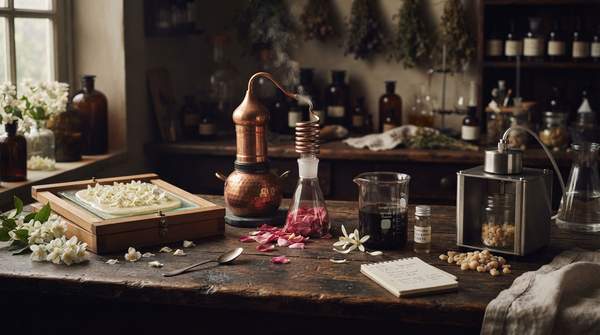
The method involves spreading a layer of odorless fat—historically a blend of 75% pork and 25% beef tallow, though now often replaced with plant-based alternatives like mango butter or coconut oil—across glass plates known as chassis, as described by Scento. Fresh flowers, such as jasmine, tuberose, gardenia, and orange blossom, are carefully placed on this fat, which gradually absorbs their aromatic oils. This technique is particularly effective for flowers that continue to produce scent after being picked, allowing for a continuous absorption of their fragrance over several days or weeks.
The resulting extract, often referred to as an enfleurage absolute, is widely considered to be the closest representation of the natural flower scent, capturing its 'true' or 'living' aroma with remarkable fidelity. Wit & West Perfumes notes that this method yields a rich, full-bodied essence, preserving the delicate aromatic compounds that might be lost or altered by heat-based extraction methods. This unique ability to capture the authentic, unaltered fragrance makes enfleurage a cherished, albeit rare, technique in high-end perfumery.
Steam Distillation: Capturing the Essence of Robust Botanicals
Steam distillation stands as one of the oldest and most widespread extraction methods, with its roots tracing back to ancient times, and has been used for centuries to produce essential oils, as VedaOils explains. This foundational technique involves passing steam through plant material, which causes the volatile aromatic compounds within the plant to vaporize. These vapors, carrying the plant's essence, are then cooled in a condenser, reverting to liquid form.
The condensed liquid separates into two distinct layers: the essential oil, which floats on top, and the hydrosol, or floral water, which is the water component. This process effectively separates the essential oils from the plant material and water. While highly effective for robust plant materials like woods, spices, herbs, and some citrus peels, the high temperatures involved in steam distillation can degrade heat-sensitive compounds, altering their delicate chemical structures.
Scento observes that steam distillation often produces sharper and more volatile scents. The resulting olfactive profile may present an earthy depth, characteristic of many essential oils, but delicate top notes can be lost or altered by the heat. This can lead to an aroma that, while potent and characteristic, might not fully represent the fresh plant's original, nuanced scent, sometimes resulting in a lighter or even a slightly cooked aroma compared to the living botanical.
Solvent Extraction: Richness and Fidelity for a Broader Palette
Solvent extraction offers a versatile and efficient approach to capturing a wide array of botanical aromas, particularly those that are too delicate for the high temperatures of steam distillation or not suitable for the labor-intensive enfleurage method. This technique gained prominence around the 1930s, becoming a reliable alternative to traditional methods, as noted by the Delacourte Paris Fragrance Guide.
The process involves using a chemical solvent, such as hexane, ethanol, or petroleum ether, to wash over the plant material. This solvent dissolves the aromatic compounds, along with waxes and pigments, from the botanical. The solvent is then evaporated, leaving behind a concentrated, waxy substance known as a \"concrete\" when derived from flowers, or a \"resinoid\" when extracted from resins. To further refine this, the concrete is typically washed with alcohol, which dissolves the aromatic compounds but leaves behind the waxes. The alcohol is then evaporated, yielding a highly concentrated and fragrant oil known as an \"absolute.\"
This technique is known for producing rich absolutes that capture a broad spectrum of the plant's natural scent, often with greater fidelity than steam distillation for certain botanicals. Scento highlights that solvent extraction yields a richness in absolutes, preserving a fuller and more complex olfactive profile. This makes it a preferred method for many flowers, such as jasmine and rose, and resins that require a gentler approach than heat-based methods, resulting in a more complete and true-to-nature aroma.
CO2 Extraction: Modern Precision for Pure Aromas
Supercritical CO2 extraction represents a modern advancement in perfumery, offering a precise and gentle method for obtaining highly pure aromatic compounds. This technique utilizes carbon dioxide under high pressure and specific temperatures, where it reaches a supercritical state—behaving as both a liquid and a gas. In this state, CO2 acts as an effective solvent, passing through the plant material to extract volatile aromatic compounds without the need for high heat or harsh chemical solvents, as detailed by Buffalo Extraction System.
Once the extraction is complete, the pressure is released, and the CO2 reverts to its gaseous state, naturally separating from the extracted compounds and leaving behind a clean, residue-free extract. Buffalo Extraction System notes that CO2-extracted aromatics command premium prices due to their true-to-nature scent quality and clean profile. This low-temperature process is particularly adept at preserving delicate notes and capturing a crisp clarity in the resulting essence.
Scento describes CO2 extracts as offering vibrant spice tones and a remarkable fidelity to the natural plant's aroma. While CO2 extraction excels in purity and fidelity, traditional methods like enfleurage still offer unique olfactive profiles that are highly valued in perfumery. The tunable selectivity of CO2 extraction allows for precise control over which compounds are extracted, contributing to batch-to-batch consistency and a clean-label appeal, positioning it as a standard for premium natural perfumery.
Comparative Overview of Perfumery Extraction Methods
The distinct characteristics of each extraction method profoundly influence the resulting aromatic profile, offering perfumers a diverse palette of essences. From the historical artistry of enfleurage to the modern precision of CO2 extraction, each technique plays a vital role in shaping the world of natural fragrances.
| Method Name | Historical Context | Primary Mechanism | Botanicals Best Suited For | Olfactive Characteristics |
|---|---|---|---|---|
| Enfleurage | An ancient method, notably revived in 18th century Grasse, France, for extracting delicate floral scents. It is a labor-intensive and time-consuming process. | Fat absorbs delicate floral aromas from fresh flowers. | Ideal for delicate, heat-sensitive flowers such as jasmine, tuberose, gardenia, and orange blossom. It is particularly effective for flowers that continue to produce scent after being picked. | Captures the 'true' or 'living' scent of delicate flowers with high fidelity, resulting in a rich, full-bodied aroma. The resulting extract is often considered to be the closest to the natural flower scent. |
| Steam Distillation | One of the oldest extraction methods, with roots dating back to ancient times. It has been used for centuries to produce essential oils. | Steam passes through plant material, vaporizing volatile compounds which are then condensed and separated from water. The process separates essential oils from the hydrosol. | Best for robust plant materials like woods, spices, herbs, and some citrus peels. Heat-sensitive compounds can be degraded by the high temperatures involved. | Often produces sharper and more volatile scents; delicate top notes can be lost or altered by heat, leading to a lighter, sometimes cooked or earthy scent profile. |
| Solvent Extraction | Developed as a more efficient alternative to enfleurage, gaining prominence around the 1930s. | A chemical solvent washes over plant material, dissolving aromatic compounds, which are then separated from the solvent. | Suitable for a broad range of botanicals, including many flowers and resins, that are too delicate for heat or not suitable for enfleurage. | Yields rich absolutes that capture a broad spectrum of the plant's natural scent, often with greater fidelity than steam distillation for certain botanicals. |
| CO2 Extraction | A modern technique that has emerged as a standard for premium natural perfumery. | Supercritical carbon dioxide acts as a solvent under pressure and temperature, extracting aromatic compounds without high heat or chemical residues. | Excellent for delicate aromatics and a wide range of botanicals, preserving the full spectrum of compounds. | Known for true-to-nature scent quality and a clean, residue-free profile, capturing crisp clarity and vibrant tones. While it excels in purity and fidelity, traditional methods like enfleurage still offer unique olfactive profiles that are valued in perfumery. |
Informing Your Choice in High-End Fragrances
The method by which natural aromatic compounds are extracted from botanicals profoundly shapes the character and quality of a fragrance. Each technique, from the ancient art of enfleurage to the modern precision of CO2 extraction, offers a unique interplay of historical context, chemical principles, and resulting olfactive profiles. The degree of fidelity to the living plant's scent varies by botanical and method, with some techniques being inherently gentler on heat-sensitive compounds, preserving their delicate nuances.
Modern extraction techniques like CO2 extraction offer advantages in preserving the full spectrum of delicate aromatic compounds due to their low-temperature and solvent-free nature, contrasting with traditional methods that may involve heat or solvent residues. However, traditional methods like enfleurage continue to be valued for their unique olfactive profiles, which often capture a specific richness or "living" quality that modern methods may not replicate. When selecting or appreciating high-end fragrances, consider the extraction method used for key natural ingredients, as it directly influences the scent's fidelity, richness, and overall character. The stated extraction method on a fragrance's ingredient list or product description can serve as a measurable indicator of the craftsmanship and desired aromatic outcome, guiding discerning enthusiasts toward fragrances that align with their preferred aromatic qualities.
Sources
- Perfume Extraction Processes: From Flower to Essence — Delacourte Paris Fragrance Guide - The Guide for Perfume Lovers
- Top 5 Extraction Techniques in French Perfumery — Scento
- The Art of Enfleurage in Perfumery: 2 Methods — WIT & WEST
- Perfume Extraction Types: Methods, Process & Techniques Explained — VedaOils
- Fragrance Extraction Methods: Why Perfumers Choose CO2 — Buffalo Extraction System