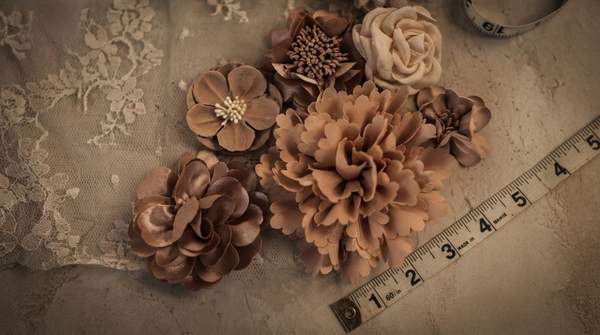
Every silk flower on a couture garment is the product of a slow, multi-stage handmade process: fabric is selected, hand-dyed, cut into petals and leaves, shaped with heated tools, and finally assembled piece by piece. Two principal traditions dominate the craft—the classical European method built around heated French flower irons and cast-iron cutters, and the Japanese-inspired Somebana technique, which aims for strikingly naturalistic blooms. Understanding how each works reveals why a single flower can embody hours of accumulated skill.
The Enduring Artistry of Haute Couture Silk Flowers
Flowers are, according to the Dutch Couture Academy, an endlessly versatile theme within haute couture—no season passes, its masterclass description observes, without a designer building part of a collection around them. Because the appearance of flowers varies enormously in shape, colour, and size, the artisan must translate botanical variety into fabric, and the techniques involved are considered a distinct body of knowledge, separate from the embroidery and sewing skills taught elsewhere.
The craft itself carries a long history: artificial flowers served as altar and processional decorations in early Christian Europe, were perfected by Italian nuns working from scraps of the northern Italian silk manufactory, and eventually travelled to Paris, where they became part of the vocabulary of fashion. The historian of the craft notes that the manufactories, many staffed by women and children at low wages, spread across Europe, with one of the largest in Sebnitz, Germany, still producing today. Haute couture inherited this lineage, though the ateliers that now supply designers work at a far more bespoke register.
Traditional European Fabric Flower Making: A Step-by-Step Guide
The European method, as documented by the Heritage Crafts association, follows a defined sequence of techniques. Cutting comes first: custom-made cast-iron cutters, each individually designed for a specific leaf or flower, punch petal shapes from fabric with precision. Historically, workers in the manufactories cut individual petals from fabric with punches before shaping them with two-part embossing dies, using heat and pressure, after which the pieces were dyed and assembled into the finished flower.
The next stage is veining, performed with a two-piece iron tool that presses a leaf's structural lines into the fabric, and then assembly, in which the leaf and petal shapes are joined to form the artificial flower. The defining instruments of the tradition are the French flower irons: a range of shaped tools that are heated and used to shape petals, create veining, and mould leaf or flower forms. Practitioners describe a closely related working sequence in their own studios.
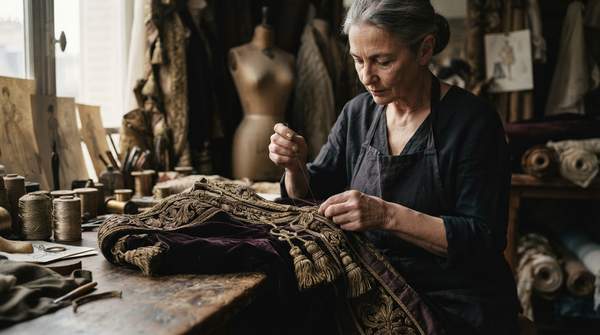
The Italian atelier Fiori in Tessuto Handmade, run by Luca Morando, creates bespoke haute couture flowers from any sketch or description supplied by a designer, working with silk and other natural fabrics but also felt, leather, straw, and any material the designer suggests. In that workshop, petals and leaves are hand-dyed in various shades, folded with traditional tools warmed over fire, and then assembled one by one, following either naturalistic forms or creative inspirations. The choice of material is deliberately broad, encompassing silk, cotton, linen, velvet, leather, and synthetics, and the colouring is a manual process throughout.